The stem with the head
The stem, made of titanium, is placed in the femur and has a ball-shaped head at the top that replaces the hip head. Titanium bonds well with the surrounding bone, ensuring it is firmly anchored.

Hip osteoarthritis can cause severe pain and make movement difficult. In such cases, a total hip prosthesis can provide relief. This artificial hip replaces the entire hip joint, allowing you to move smoothly and without pain. At Cortoclinics, hip prostheses are placed using advanced robotic arm technology for extra precision.
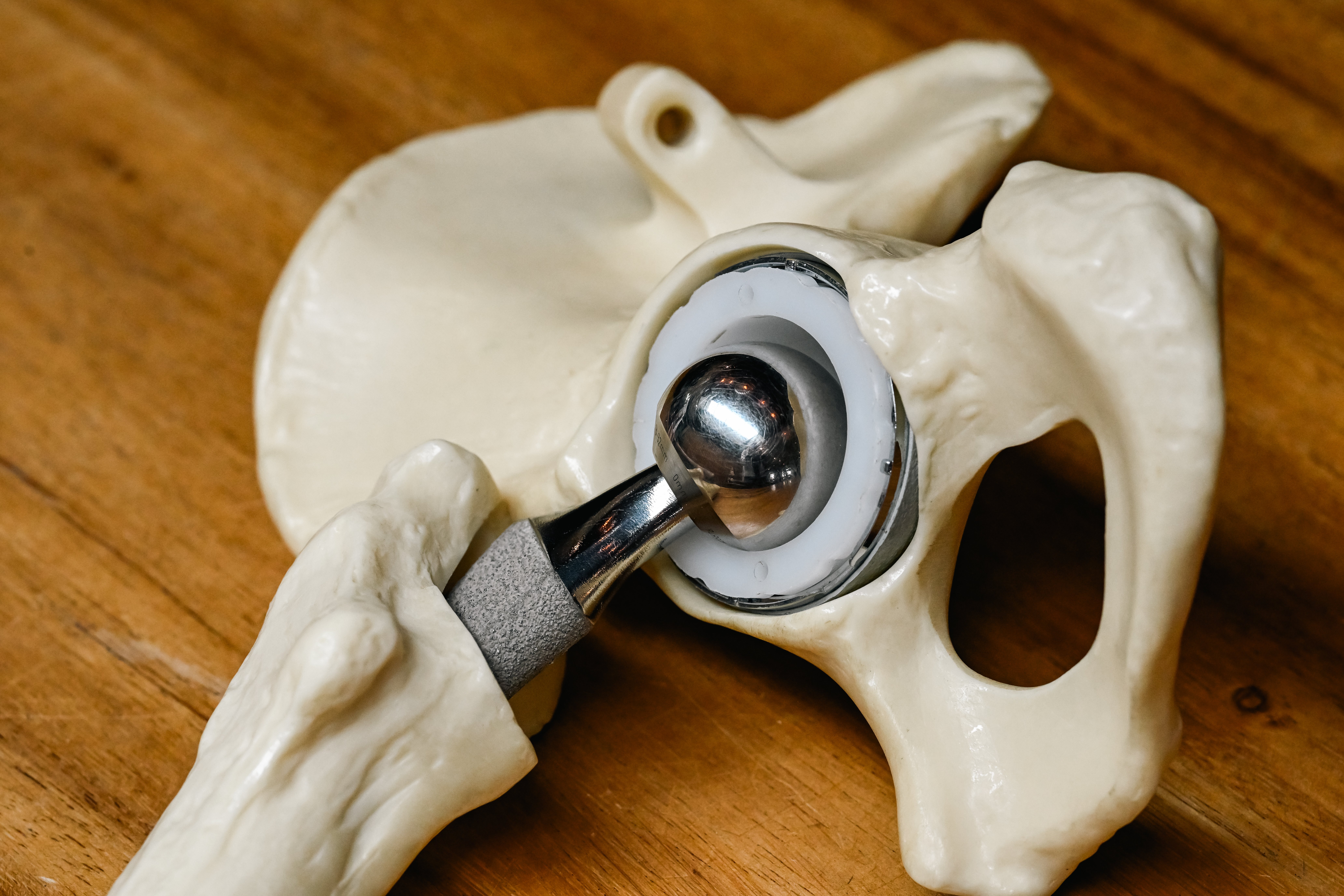
The stem, made of titanium, is placed in the femur and has a ball-shaped head at the top that replaces the hip head. Titanium bonds well with the surrounding bone, ensuring it is firmly anchored.
This part replaces the natural hip socket in the pelvis. It is made of metal (titanium) and provides stability.
Made of high-quality plastic (X3 polyethylene), this forms a smooth gliding layer between the socket and the head, allowing for smooth movement without friction.
These materials are specifically designed for medical use, encouraging bone ingrowth and being well accepted by the body. Consequently, bone cement is unnecessary; the prosthesis naturally integrates with the bone.
At Cortoclinics, we use Mako-supporting robotic arm technology for hip replacements. With 3D imaging and real-time feedback, the robotic arm assists the surgeon in accurately placing the implant according to your anatomy. This leads to a better fit and alignment, faster recovery, and long-term satisfaction.
The surgeon sets up the robotic arm with CT scan data and controls it during the surgery. The robotic arm removes no more bone than necessary, resulting in a perfect fit for your hip prosthesis.



The average lifespan of a hip prosthesis is between 15 and 20 years, depending on various factors such as the load placed on the prosthesis and the quality of the bone structure. The hip prostheses used by Cortoclinics have been extensively tested for durability. These studies show that a hip prosthesis functions well for at least 10 years (ODEP rating 10A).
Because these prostheses have been on the market for many years and are made from materials with a proven long lifespan, they are expected to last 15 to 20 years in practice. As prostheses remain in use longer, their rating may increase further, which additionally confirms their durability.
When a hip prosthesis wears out or becomes loose over time, it can often be partially or completely replaced. This is called a revision.